
Warehouse Management with Business Central
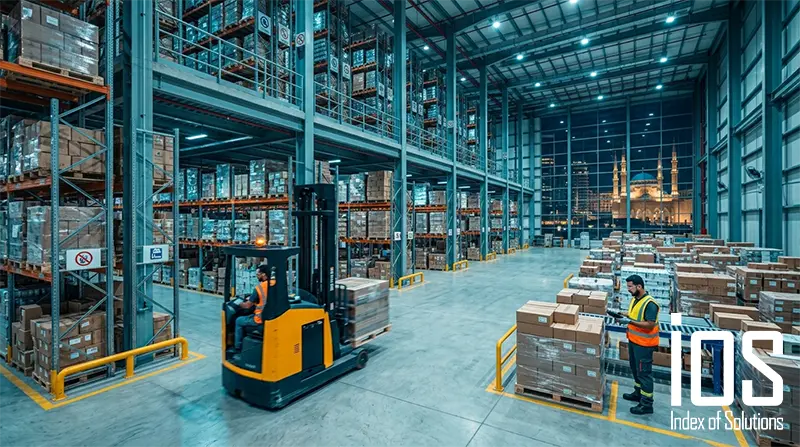
Most warehouse problems are actually data problems. Stock goes missing not because it physically disappears, but because nobody knows exactly where it is. Business Central's warehouse management module gives you bin-level control of your entire warehouse — from the moment goods arrive to the moment they leave — without adding a separate WMS system to your technology stack.
Warehouse Features in Business Central
Bin & Location Management
Define your warehouse down to zone, aisle, rack, and bin level. Every item has a known location — so staff find stock instantly and managers see exactly where inventory sits at any moment.
Barcode & Mobile Scanning
Warehouse staff use handheld scanners or mobile devices to receive goods, confirm put-aways, pick orders, and perform stock counts — eliminating paper-based processes and data entry errors.
Directed Put-Away & Pick
Business Central directs staff to the optimal bin for put-away based on item rules, capacity, and zone logic. Picks are optimised to reduce travel time — cutting the minutes spent per order in half.
Lot & Serial Traceability
Track every item by lot number or serial number from goods receipt to customer delivery. Full forward and backward traceability — essential for pharma, food, electronics, and any business subject to product recalls.
Cycle Counting
Replace disruptive annual stocktakes with rolling cycle counts. Business Central schedules counts by zone or item category — staff count continuously throughout the year so inventory accuracy stays above 99% without shutting down operations.
Cross-Docking
Move goods directly from incoming shipments to outgoing delivery without putting them away. Business Central supports cross-docking for high-velocity items, reducing handling time and warehouse footprint.
WMS Built Into Your ERP — No Integration Required
The biggest problem with standalone WMS systems is the integration layer between the warehouse and the ERP. Every goods receipt, pick, or transfer has to sync between two databases — creating delays, errors, and a permanent maintenance burden.
Business Central's warehouse module runs in the same database as your financials, purchasing, and sales. A goods receipt in the warehouse is immediately visible to purchasing. A picked order updates inventory and triggers invoicing automatically. There is no sync, no interface, and no data gap between warehouse and back office.
Warehouse Complexity Levels
Business Central's warehouse functionality scales with your operation. You choose the level that matches your complexity:
Basic Warehousing
Single location, no bins, inventory posted directly. Right for small warehouses with simple in/out flows.
Bin Management
Multi-location with bin tracking. Staff see exact bin locations; no directed instructions yet. Good for medium warehouses.
Advanced Warehousing
Full directed put-away and pick, zone management, mobile scanning, and cross-docking. For high-volume distribution operations.
Common Questions
Do I need a separate WMS system if I use Business Central?
For most Lebanese SMBs and mid-market distributors, Business Central's built-in warehouse module covers everything needed — bin management, directed pick and put-away, barcode scanning, lot tracking, and cycle counting. A separate WMS is typically only needed for very large, highly automated warehouses with conveyor systems or robotic picking. We assess your operation during discovery and advise honestly.
What hardware do warehouse staff need?
Business Central's warehouse module works with standard Android or Windows-based handheld scanners (like Zebra or Honeywell devices), tablets, or even smartphones. We recommend devices based on your warehouse environment — cold storage, outdoor use, or high-drop risk all have different hardware requirements.
Can Business Central handle multiple warehouses in different locations?
Yes. Business Central supports unlimited warehouse locations, each with their own bin structure, zones, and policies. Inter-warehouse transfers are managed through transfer orders, with full inventory tracking across all locations in real time.
We have 50,000+ SKUs. Can Business Central handle that scale?
Yes. Business Central is used by distribution companies with hundreds of thousands of SKUs. The item catalogue has no practical limit, and warehouse operations scale with database capacity rather than any system-imposed ceiling.